
Blog
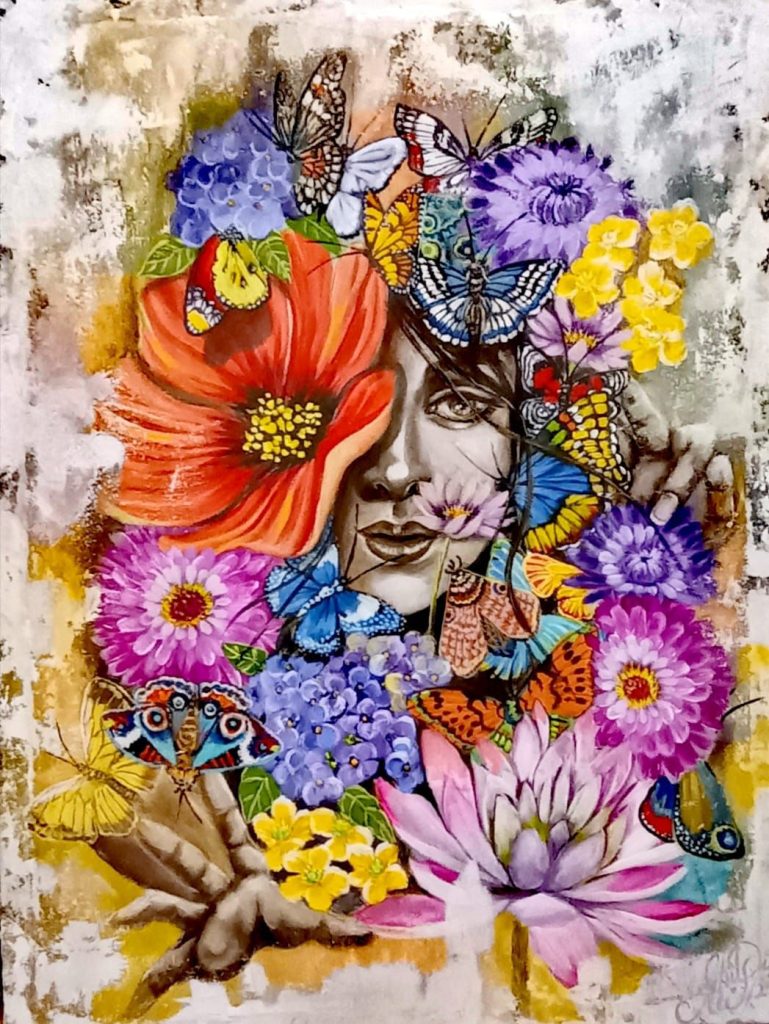
All Art Echo artist members must know his/her Painting Style:
• Realism – Focuses on painting subjects as they appear in real life, with careful attention to detail and accuracy.
• Impressionism – Captures light, color, and mood with visible brushstrokes, giving a lively and vibrant feeling rather than exact detail.
• Expressionism – Expresses inner emotions and feelings through color and brushwork, sometimes dramatic or bold, focusing on mood over realism.
• Cubism – Breaks subjects into geometric shapes and shows multiple angles at once, often abstract and fragmented.
• Abstract Art – Moves away from realistic subjects; uses shapes, colors, and lines to create compositions that don’t represent the real world directly.
• Surrealism – Dreamlike and imaginative; combines realistic details with fantastical or illogical elements.
• Photorealism – Paintings are made to look like high-quality photographs, with extremely fine and precise detail.
* Minimalism – Very simple, stripped-down compositions using limited colors and shapes.
• Fauvism – Strong, bright, unnatural colors with bold brushwork.
• Pop Art – Inspired by popular culture, advertising, and mass media (like Andy Warhol).
• Symbolism – Uses images and forms to express ideas, dreams, or emotions rather than direct reality.
• Romanticism – Focuses on drama, emotion, and nature, often very atmospheric.
• Contemporary Art – A broad term for art made today, mixing many influences and styles.
• Modernism – A general movement from the late 19th–20th century focusing on breaking away from traditional forms.
• Abstract Realism – Real subjects painted with an abstract touch, recognizable but expressive.
• Figurative Art – Represents real-world figures (people, objects, animals), not always in strict realism.
• Conceptual Art – Focuses more on the idea or concept behind the work than on its appearance.
• Oriental Art – Focuses more on the idea or concept behind the work than on its appearance. This is also called Eastern Art.
• Impasto – The paint is applied thickly to a surface, creating a heavy texture that shows the artist’s brush or palette knife marks, adding three-dimensionality and a sense of depth to the work.This technique enhances the painting’s texture and can be used to create emphasis, express emotion, or convey the energy of light and form.